
ANSO-COMSATS-TWAS International Conference Opens in Islamabad, Advancing Global Scientific Cooperation for a Sustainable Future
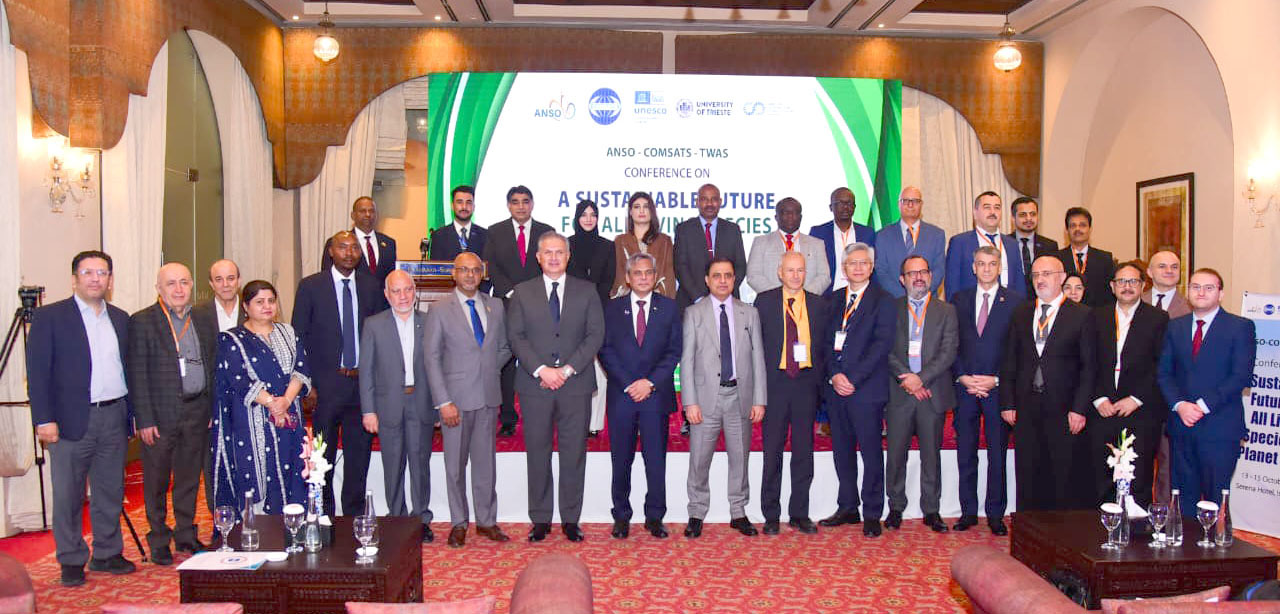
The three-day ANSO-COMSATS-TWAS International Conference on “A Sustainable Future for All Living Species on Planet Earth” commenced on October 13, 2026, at Serena Hotel, Islamabad, bringing together an international community of scientists, researchers, policymakers, diplomats, and representatives of leading scientific organizations to explore science-driven approaches to addressing global sustainability challenges.
Organized by the Commission on Science and Technology for Sustainable Development in the South (COMSATS), with financial support from the Alliance of International Science Organizations (ANSO) and The World Academy of Sciences (UNESCO-TWAS), the Conference provided an international platform for interdisciplinary dialogue, scientific collaboration, and knowledge exchange. The University of Trieste, Italy, also contributed to the initiative through its role in conceptualizing the Conference proposal. Recognizing its contribution to the global sustainability agenda, the Conference was endorsed as an official activity of the International Decade of Sciences for Sustainable Development (IDSSD) 2024–2033.
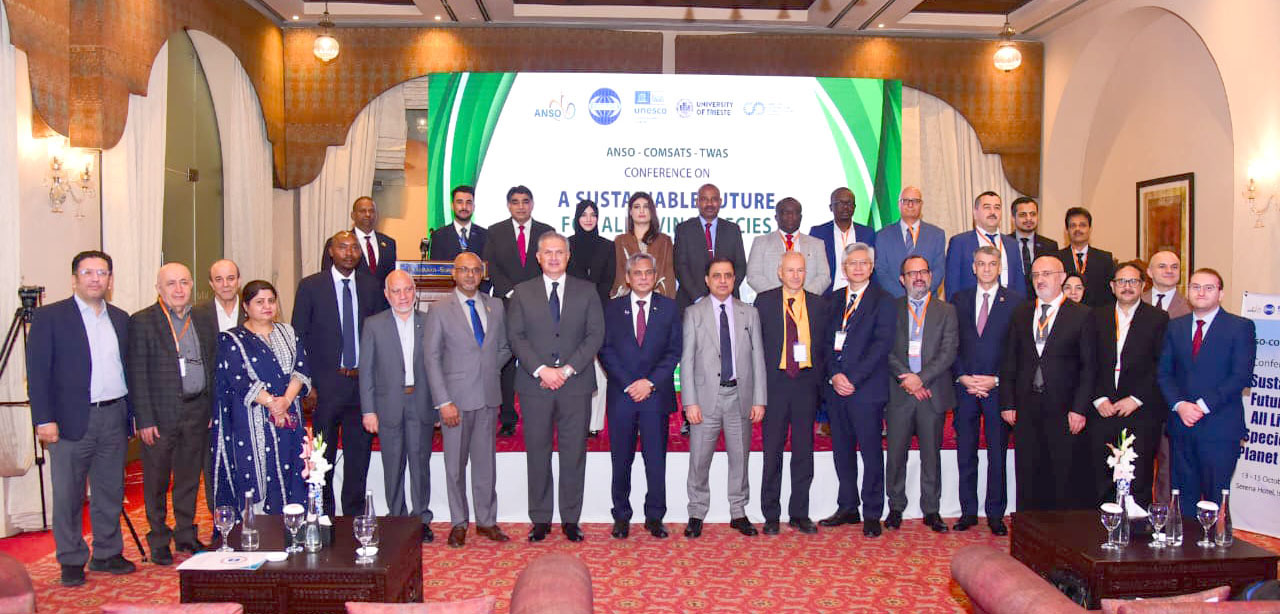
The opening ceremony was attended by Mr. Shahid Iqbal Baloch, Federal Secretary, Ministry of Science and Technology (MoST), who graced the occasion as Chief Guest. The ceremony brought together distinguished representatives of diplomatic missions, national research institutions, and international scientific organizations, reflecting the broad-based commitment to advancing science and technology for sustainable development.
In his welcome address, Ambassador Dr. Mohammad Nafees Zakaria, Executive Director of COMSATS, underscored the importance of international scientific cooperation in responding to interconnected challenges affecting planetary sustainability. He highlighted COMSATS' mandate of promoting South-South cooperation and strengthening scientific and technological collaboration among its Member States. Emphasizing the need to connect scientific expertise, institutional capacities, and policy perspectives, he reaffirmed the importance of collective action in advancing sustainable development, particularly across the developing world.
Addressing the gathering, Chief Guest Mr. Shahid Iqbal Baloch highlighted the critical role of science, technology, and innovation in responding to contemporary development challenges. He emphasized the need for stronger partnerships among governments, research institutions, and international organizations to translate scientific knowledge into practical solutions. His remarks reaffirmed Pakistan's commitment to international cooperation, knowledge-sharing, and strengthening scientific capacities for sustainable development.
Dr. Max Paoli, Programme Coordinator at UNESCO-TWAS, highlighted the significance of international scientific platforms in addressing shared global challenges. He emphasized the importance of strengthening scientific capacities, ensuring inclusive access to knowledge, and fostering international partnerships, particularly to support researchers and scientific institutions in developing countries.
Prof. Quarraisha Abdool Karim, President of The World Academy of Sciences (TWAS), addressed the opening ceremony. In her message, she conveyed TWAS's support for the Conference and emphasized the importance of international scientific collaboration and capacity-building in advancing solutions to global sustainability challenges.
The Conference is structured around three interconnected thematic pillars: Sustainability Education and Planetary Health; the Water-Energy-Food-Ecosystems (WEFE) Nexus for Sustainability; and Science-Policy Dialogue for a Sustainable Future. Together, these themes provide a multidisciplinary framework for examining the interdependence of human well-being, environmental integrity, resource security, and sustainable development.
Over the three days, the scientific programme brings together diverse perspectives and research contributions through presentations, expert discussions, and interdisciplinary exchanges covering critical areas such as climate change, biodiversity conservation, ecosystem resilience, sustainable agriculture, food security, biotechnology, artificial intelligence, and the integration of scientific evidence into policymaking.
With participation from scientists, researchers, and experts representing diverse countries and institutions, the Conference aims to strengthen international research linkages, encourage South-South scientific cooperation, and facilitate the exchange of knowledge, expertise, and practical experiences. It also seeks to reinforce the role of science, technology, and innovation as essential drivers of inclusive and sustainable development, while fostering partnerships capable of translating scientific insights into meaningful action.
The Conference reflects the shared commitment of COMSATS, ANSO, and UNESCO-TWAS to advancing international scientific cooperation and strengthening the contribution of science to global sustainability efforts. Through this collaborative initiative, the participating organizations seek to promote a more connected scientific community and support collective efforts towards a sustainable future for all living species on Planet Earth.