
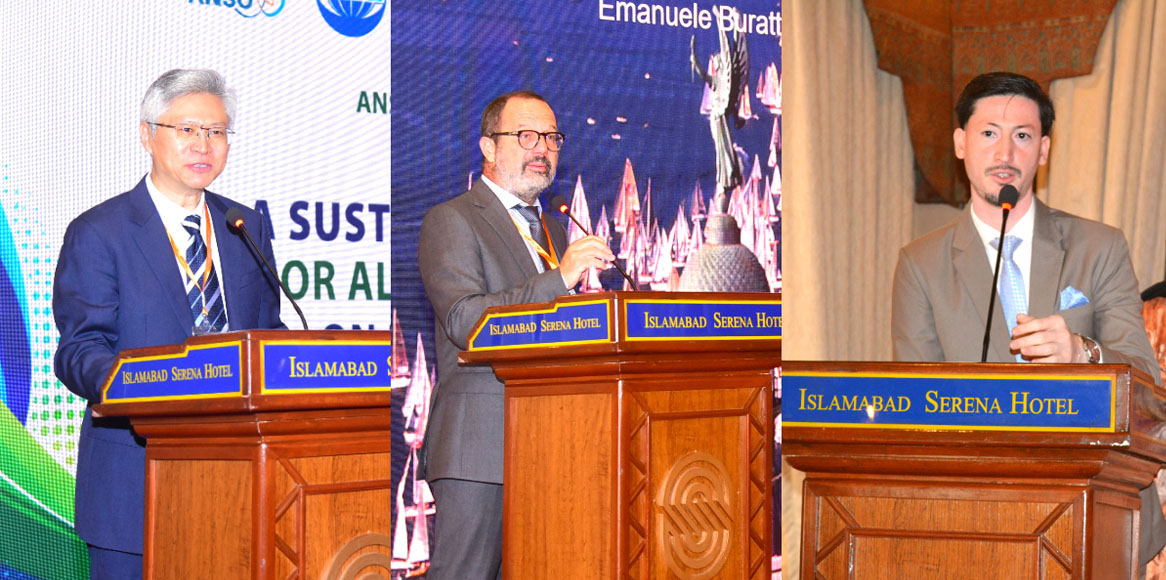
ANSO-COMSATS-TWAS Conference Advances Science, Innovation and International Cooperation for a Sustainable Future
Islamabad, 15 October 2026 – The Commission on Science and Technology for Sustainable Development in the South (COMSATS) successfully organized the ANSO-COMSATS-TWAS Conference on “A Sustainable Future for All Living Species on Planet Earth” in Islamabad, Pakistan, from 13 to 15 October 2026.
The three-day international scientific gathering brought together scientists, policymakers, academics, research leaders, and young researchers from 19 countries across Asia, Africa, Europe, and North America. With participation from international scientific organizations, universities, research institutions, and national bodies, the Conference provided a multidisciplinary platform for exchanging scientific knowledge, sharing institutional experiences, and exploring science- and technology-driven approaches to planetary health, environmental sustainability, and sustainable development.
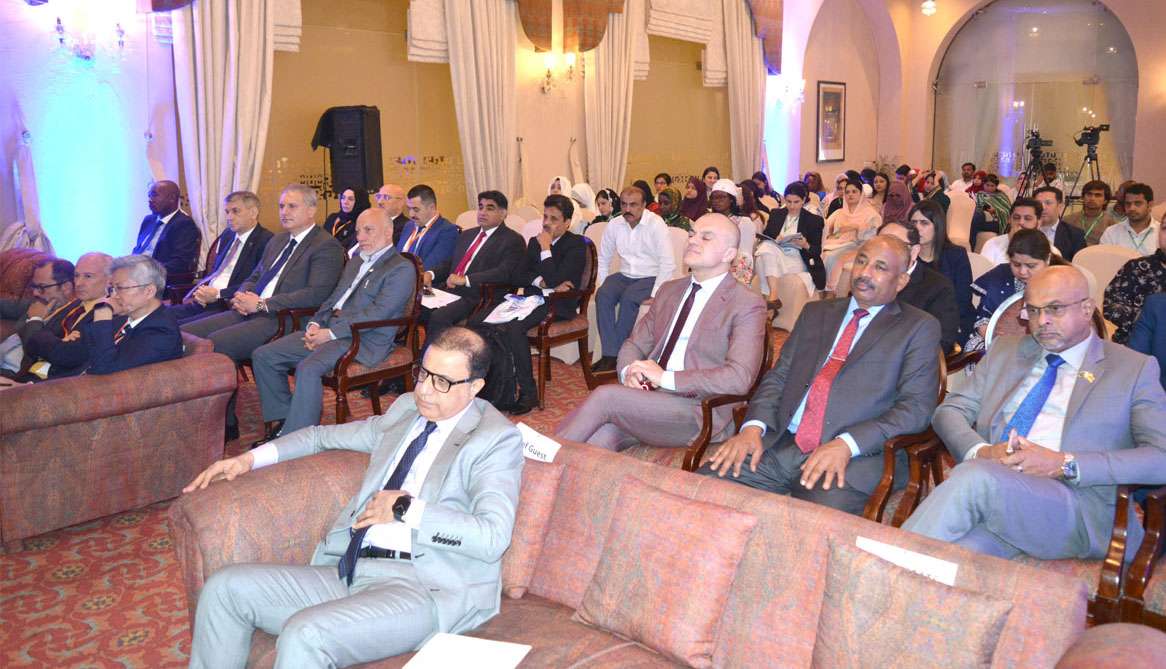
The technical programme was structured around three interconnected thematic pillars: Sustainability Education and Planetary Health; the Water-Energy-Food-Ecosystems (WEFE) Nexus for Sustainability; and Science-Policy Dialogue for a Sustainable Future. Across the three days, 15 speakers delivered presentations covering 14 topics, addressing interconnected challenges, including climate change, biodiversity, ecosystem resilience, sustainable agriculture, food security, biotechnology, artificial intelligence, climate finance, disaster risk reduction, and the translation of scientific research into policy and practice.
The first day of technical sessions explored the relationship between climate change, human activities, biodiversity, ecosystem resilience, and planetary sustainability. Mr. Bilal Anwar, former Chief Executive Officer of Pakistan’s National Disaster Risk Management Fund (NDRMF) and Member of the Board of Advisory of the Climate Institute, Washington, DC, delivered the opening keynote address, highlighting the widening gap between climate science and the decisions shaping global climate action. Referring to prevailing emissions trajectories and projected global warming, he emphasized the implications for developing countries, particularly in agriculture, water security, health, infrastructure, and human settlements. He underscored the need to strengthen science-policy linkages, mobilize climate finance, and ensure a stronger role for the Global South in defining climate challenges and developing solutions.
Mr. Khurram Lalani, Principal of Resources Future Pakistan, presented “Becoming Earth,” using historical and contemporary photographs to illustrate the relationship between urbanization, population growth, infrastructure expansion, and environmental change. Drawing attention to the historical Great Smog of London, he discussed the environmental consequences of development patterns and explored carbon credits as an instrument for climate action. He also highlighted potential opportunities in Pakistan, including initiatives linked to the revival of mango cultivation, demonstrating how agriculture and carbon-related interventions could contribute to sustainable development.
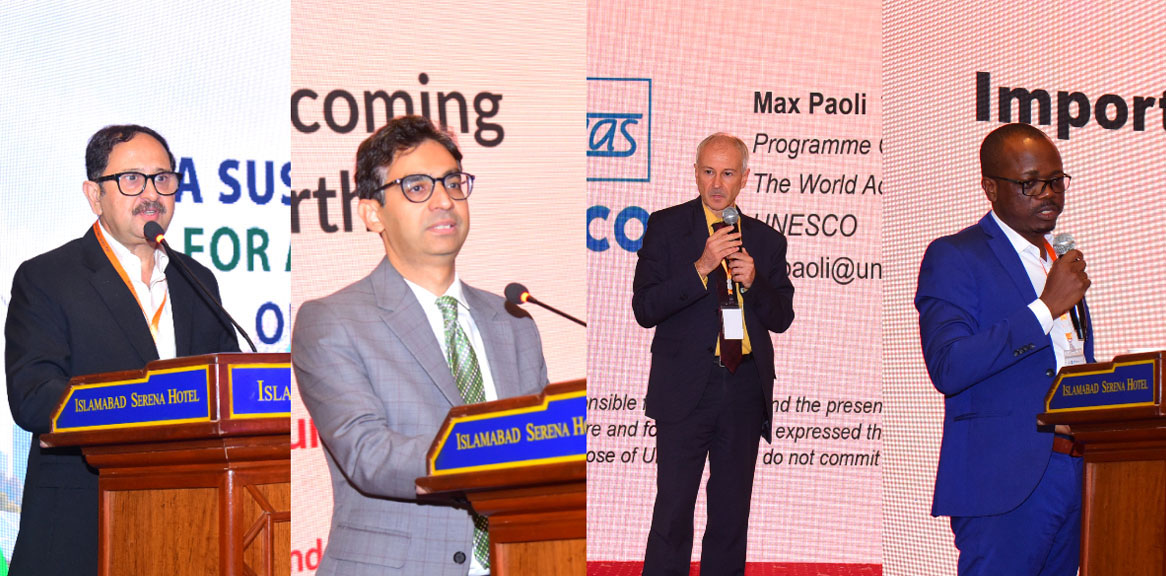
Dr. Max Paoli, Programme Coordinator at UNESCO-TWAS, delivered a presentation titled “The Role of Science and Education for Sustainable Development”. He highlighted the growing human footprint on the natural environment, including the decline in vertebrate wildlife populations since 1970 and the increasing concern surrounding biodiversity loss and the sixth mass extinction. Discussing anthropocentric and ecocentric perspectives, he emphasized the importance of science education in developing environmental awareness, strengthening scientific understanding, and translating knowledge into responsible action.
Addressing the health dimensions of ecosystem management, Dr. Chabi Adéyèmi Marc Sylvestre Djagoun, Associate Professor at the Faculty of Agronomic Sciences, University of Abomey-Calavi, Benin, and a member of COMSATS’ Technical Advisory Committee, presented “Managing Ecosystem to Prevent Health Risks at Human-Wildlife Interface”. His presentation examined the relationship between ecosystem services, biodiversity, and zoonotic disease risks, highlighting the importance of ecosystem restoration, wildlife recolonization, and the EcoHealth approach to managing hunting systems in Benin. He also discussed the contribution of ecosystems to freshwater availability, food, timber, fibre, fuel, biological resources, disease regulation, nutrient cycling, and climate regulation.
The second day of technical sessions focused on sustainable production systems, planetary boundaries, biotechnology, artificial intelligence, and the role of research institutions in informing policy and development decisions.
Prof. Dr. Jibin Sun, Director of the Systems Biology Research Center at the Tianjin Institute of Industrial Biotechnology, Chinese Academy of Sciences (TIB-CAS), Chairperson of the COMSATS Coordinating Council, and Director of the COMSATS Joint Center for Industrial Biotechnology (CCIB), presented “Biomanufacturing for a Sustainable Planet”. He highlighted the potential of biological systems, synthetic biology, artificial intelligence, and automation to transform manufacturing processes, reduce dependence on fossil-based feedstocks, and support the development of a sustainable bioeconomy. He also emphasized the importance of strengthening research and development, technical skills, industrial capacity, and investment to enable developing countries to benefit from emerging biomanufacturing opportunities. The presentation highlighted the role of CCIB in promoting industrial biotechnology and South-South and triangular cooperation.
Mr. Muhammad Ismail Khan, Assistant Manager at the National Disaster Management Authority (NDMA), presenting on behalf of its Executive Director (Technical), Mr. Seyed Muhammad Tayyeb Shah, delivered “Beyond the Limits: Planetary Boundaries and the Future of Earth”. Referring to the planetary boundaries framework, he highlighted that seven of the nine identified boundaries have been transgressed, signaling increasing risks to food and water security, public health, cities, infrastructure, and economic systems. Drawing attention to the recovery of the ozone layer as an example of successful international environmental action, he emphasized the need for integrated measures, including emissions reduction, ecosystem restoration, improved water efficiency, pollution management, early warning systems, and resilient infrastructure.

Prof. Emanuele Buratti, Scientific Coordinator at the International Centre for Genetic Engineering and Biotechnology (ICGEB), presented “Building International Scientific Collaboration in Biotechnology and Food Security: The ICGEB Experience”. He discussed the role of international research partnerships, capacity-building, and technology transfer in addressing challenges related to biotechnology, food security, and health. Highlighting the scientific relationship between Italy and Pakistan and the legacy of Prof. Dr. Abdus Salam in promoting international scientific cooperation, he also discussed ICGEB’s research initiatives, including work on fibrosis and bacteriophage-based approaches to combat antimicrobial resistance. Reference was made to phage research and the establishment of a phage bank for the Horn of Africa, illustrating the potential of biotechnology research to address pressing regional health challenges.
Prof. Dr. Rahmat Sotudeh-Gharebagh, Director of the IORA Regional Centre for Science and Technology Transfer (IORA-RCSTT), Iran, and a member of COMSATS’ Technical Advisory Committee, presented “Artificial Intelligence for a Sustainable Future: Bridging Science and Policy”. He discussed the potential of artificial intelligence in environmental monitoring, early warning systems, integrated data analysis, and scenario development. At the same time, he drew attention to the environmental costs and governance challenges associated with AI, emphasizing the importance of responsible deployment, human oversight, scientific capacity, and stronger connections between research and policy. He advocated identifying shared challenges, developing measurable pilot initiatives, and evaluating their effectiveness before wider implementation.
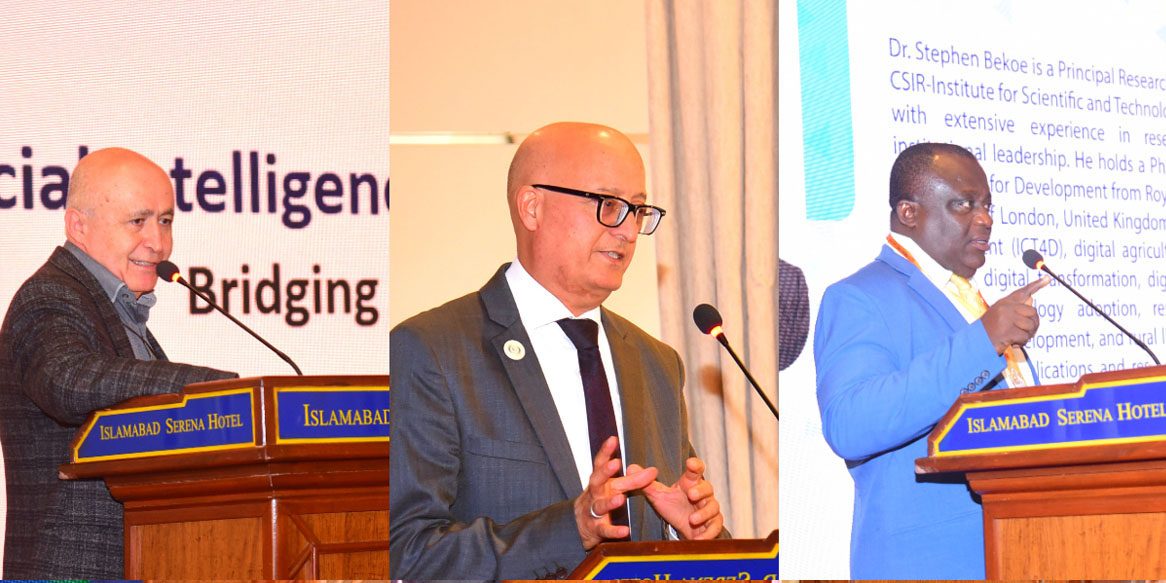
Dr. Adel Smeda, Expert in Science and Technology at the Islamic World Educational, Scientific and Cultural Organization (ICESCO), presented “From Science to Action: Connecting Innovation, Technology and People for a Sustainable Future”. He examined the persistent gap between scientific research and its practical application, emphasizing the need to connect research institutions, policymakers, technology developers, and communities. Drawing on ICESCO’s initiatives across its 53 Member States, he highlighted areas including satellite applications, artificial intelligence, quantum technologies, agroforestry, water management, youth climate engagement, the blue economy, high-performance computing, and Earth observation. He underscored the importance of technology accessibility, institutional capacity, digital skills, gender and youth inclusion, and cross-border cooperation in ensuring that scientific innovation responds to local and regional priorities.
Dr. Stephen Bekoe, Deputy Director of Ghana’s Council for Scientific and Industrial Research –Institute for Scientific and Technological Information (CSIR-INSTI), presented “Bridging the Science-Policy Dialogue Gap: Lessons from Ghana for a Sustainable Future”. Drawing on Ghana’s research and innovation landscape, including its network of research institutions and identified technological innovations, he examined the challenges that limit the effective use of scientific evidence in policymaking. He identified gaps relating to research priorities, policy timing, institutional coordination, financing, stakeholder participation, and feedback mechanisms. Highlighting the role of CSIR and its policy-oriented research institutions, he emphasized the need for stronger science advisory mechanisms, embedded researchers, accessible evidence products, and improved connections between research organizations and national planning processes.
The third and final day of technical sessions examined the interconnected dimensions of food security, resource management, sustainable production, planetary health, and climate resilience, with particular emphasis on practical approaches and international cooperation.
Dr. Memduh Ünal, Director of Programmes at the Islamic Organization for Food Security (IOFS), presented “Optimizing the WEFE Nexus for Climate-Resilient Agriculture: A Framework for South-South Cooperation and Food Security”. He emphasized that food security extends beyond agricultural production and is influenced by access, nutrition, affordability, market conditions, and resilience. Highlighting the interdependence of water, energy, food, and ecosystems, he discussed the need for context-specific planning that accounts for constraints related to water, land, energy, labour, agricultural inputs, credit, and institutional capacity. He also highlighted the potential of digital agriculture, early warning systems, and South-South cooperation in strengthening water governance, crop planning, and climate-resilient food systems, identifying opportunities for Pakistan to contribute as a knowledge partner.
Dr. Sudarshana Somasiri, Additional Director at the Industrial Technology Institute (ITI), Sri Lanka, presented “Zero Waste Cinnamon Processing Centre”. Sharing the experience of a proposed Central Cinnamon Processing Facility in Sri Lanka’s Southern Province, he outlined an integrated processing model aimed at improving product quality, utilizing agricultural by-products, and generating biomass energy. The initiative, proposed at the University of Ruhuna, would support more than 100 smallholders and workers and promote value addition across the cinnamon supply chain. He discussed opportunities for producing cinnamon quills, powder, bark and leaf oils, charcoal, biomass pellets, and other value-added products, while highlighting the importance of technical support, improved processing practices, and public-private partnerships in advancing resource-efficient production.
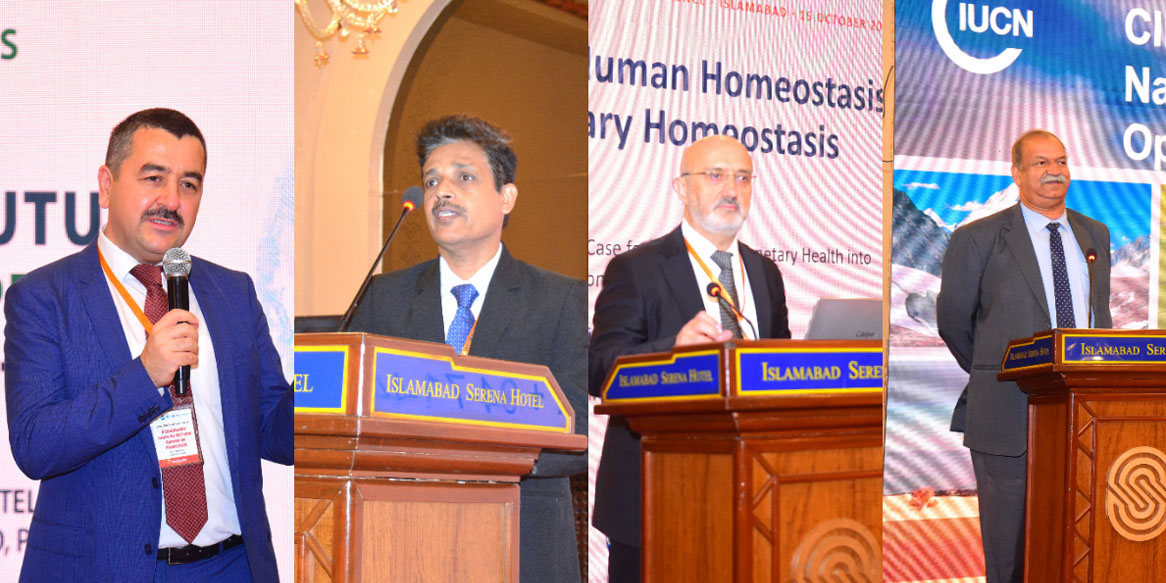
Prof. Dr. Sadrettin Pençe, Professor of Physiology and Dean of the Faculty of Medicine at Istanbul Medeniyet University, Türkiye, presented “From Human Homeostasis to Planetary Homeostasis: A Physiologist’s Case for Integrating Planetary Health into Medical Education”. Drawing parallels between the physiological balance of the human body and the stability of planetary systems, he discussed the health consequences of environmental disruption, including heat stress, air pollution, and climate-related health risks. He emphasized the need to integrate planetary health and climate-related health impacts into medical curricula, clinical education, and research, while encouraging collaboration among medical educators to strengthen the response of health systems to environmental change.
Mr. Mehmood Akhtar Cheema, former Country Representative of IUCN Pakistan, discussed “Climate Change Impacts on Natural Resources: Opportunities for a Sustainable Future”. Drawing on Pakistan’s experience in conservation planning, including the National Conservation Strategy of 1992 and subsequent provincial strategies, he highlighted the country’s vulnerability to climate change, particularly glacier melt, glacial lake outburst floods, water stress, agricultural pressures, and impacts on forests, biodiversity, and mangrove ecosystems. He also identified opportunities associated with climate-resilient development, including micro-hydropower, high-altitude agriculture, and climate-friendly infrastructure. Emphasizing the importance of implementation, he highlighted climate data, financing, research, institutional capacity, ecosystem management, climate diplomacy, and gender-responsive planning as important elements of effective mitigation and adaptation.
Across all three days, the technical sessions were complemented by open-floor discussions, during which participants raised questions, exchanged perspectives, and engaged with speakers on the scientific and practical dimensions of the topics presented. The discussions reinforced the importance of interdisciplinary research, context-specific approaches, institutional collaboration, and the translation of scientific evidence into policies and solutions that respond to the needs of communities and ecosystems.
The Conference brought together scientific evidence, technological innovation, and institutional experience to examine the interconnected challenges affecting planetary health and sustainable development. By convening experts from various countries and facilitating engagement among national and international scientific institutions, the Conference strengthened opportunities for professional networking, knowledge exchange, and future collaboration. It also provided a platform for showcasing Pakistan’s academic, scientific, technological, and disaster risk management capabilities and for reinforcing COMSATS’ role in facilitating South-South scientific cooperation.